Superdrol commands serious respect in experienced bodybuilding and strength athletics communities worldwide....
Latest posts
-
 Superdrol Cycle Guide: Results, Risks, and What Nobody Tells YouRead more
 -
 Women and SARMs: What Every Female Athlete Must Know Before CyclingRead more
Selective androgen receptor modulators have attracted growing interest among female athletes and fitness enthusiasts....
-
 Test Cypionate and Deca: How to Run This Powerful Mass-Building StackRead more
Cycle length typically ranges from 12 to 16 weeks for experienced users. Additionally, testosterone cypionate serves...
-
 Five Aromasin Side Effects Every Athlete Must Know and PreventRead more
Aromasin plays a critical role in managing estrogen levels during and after anabolic compound cycles. Furthermore, it...
-
 Anavar Body Recomposition: The Truth Behind the Fat Loss ResultsRead more
Anavar consistently earns its reputation as one of the most sought-after compounds in physique sports. Furthermore,...
-
 The Science of Thermogenesis: How Clenbuterol Affects Metabolism and Fat LossRead more
Thermogenesis describes the biological process through which the body generates heat to burn stored energy....
-
 All That You Need to Know About ParabolanRead more
Parabolan stands among the most potent anabolic compounds ever discussed in serious bodybuilding communities....
-
 Test Cypionate and Deca Cycle: What Athletes Need to KnowRead more
Anabolic compounds have long attracted serious athletes seeking accelerated performance and physique gains....
-
 High-Calorie Meal Prep for Serious Bulkers on a Tight ScheduleRead more
Building a bigger, stronger physique demands more than just hard training. Furthermore, it demands a deliberate and...
-
 Periodisation for Bodybuilders: Why Changing Your Programme MattersRead more
Every dedicated bodybuilder eventually hits a frustrating wall. Consequently, progress stalls, motivation drops, and...
Blog categories
Search in blog
The Impact of Anabolic Compounds on Lipid Profiles Explained Simply
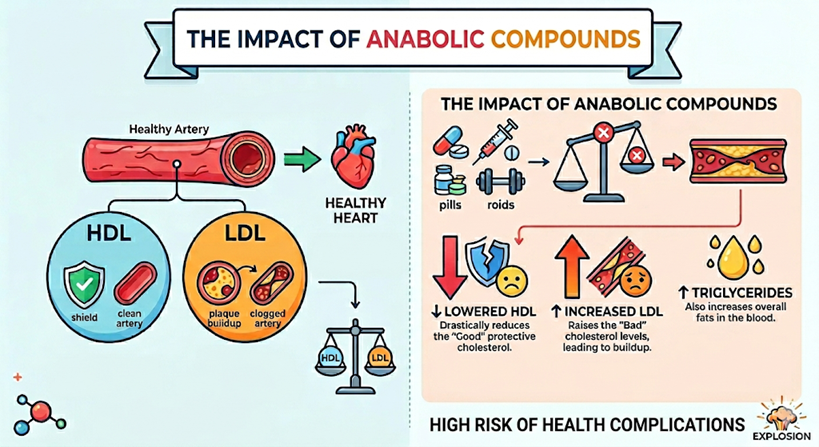
Many athletes focus entirely on muscle gains while completely ignoring cardiovascular health markers. However, anabolic compounds consistently produce significant, measurable changes in your lipid profile. Furthermore, these changes represent one of the most serious health risks associated with performance enhancement. Your lipid profile measures the levels of different cholesterol and fat particles in your bloodstream. Consequently, understanding these numbers becomes absolutely essential for every athlete using anabolic compounds. Moreover, cholesterol exists in two primary forms that affect your cardiovascular health very differently. HDL cholesterol actively protects your arteries and significantly reduces cardiovascular disease risk. Additionally, LDL cholesterol accumulates in arterial walls, significantly increasing heart disease risk. Furthermore, anabolic compounds typically suppress beneficial HDL while simultaneously elevating harmful LDL levels. Many experienced athletes on Reddit openly share bloodwork results revealing dramatic lipid alterations during cycles. Moreover, community discussions consistently highlight how quickly these changes occur after beginning a compound. Health authorities confirm that prolonged, unfavorableunfavorable lipid changes accelerate the development of arterial plaque dangerously. Consequently, ignoring your lipid profile during and after a cycle creates serious long-term cardiovascular consequences. Additionally, oral anabolic compounds generally cause more severe lipid disruption than injectable alternatives. Therefore, monitoring and actively managing your lipid profile becomes a non-negotiable responsibility for every informed athlete.
How Anabolic Compounds Alter Your Cholesterol Levels
First, anabolic compounds stimulate hepatic lipase enzyme activity within your liver significantly. Consequently, this increased enzyme activity rapidly breaks down and removes HDL particles from circulation. Furthermore, your liver simultaneously increases LDL production in response to hormonal changes. Moreover, this dual effect creates a dangerously imbalanced cholesterol ratio relatively quickly. Additionally, the severity of lipid disruption varies considerably depending on the specific compound you use. Therefore, researching each compound's lipid impact before starting any cycle remains critically important.
Oral vs Injectable Compounds and Lipid Impact
Furthermore, the method of administration significantly influences the extent of changes in your lipid profile. Oral anabolic compounds pass directly through your liver during the first-pass metabolism process. Consequently, this hepatic processing results in significantly greater disruption of cholesterol-regulating mechanisms. Moreover, injectable compounds bypass first-pass liver metabolism, resulting in comparatively milder lipid alterations. Additionally, shorter cycle durations with injectable compounds generally yield more manageable, reversible lipid changes. Therefore, athletes concerned about cardiovascular health often prefer injectable formats for this specific reason.
Warning Signs and Symptoms You Should Monitor
Moreover, unfavorable lipid changes rarely produce obvious or immediately noticeable physical symptoms. Consequently, many athletes unknowingly sustain significant cardiovascular damage without feeling any warning signs. Furthermore, elevated blood pressure often accompanies worsening lipid profiles during active compound cycles. Additionally, persistent headaches, unusual shortness of breath, and chest tightness warrant immediate medical evaluation. Moreover, these symptoms may indicate developing cardiovascular strain requiring prompt professional attention. Therefore, never dismiss physical warning signs during a cycle as ordinary training-related discomfort.
Dietary Strategies That Actively Protect Your Lipid Profile
Fortunately, specific dietary choices actively counteract the lipid-disrupting effects of anabolic compounds. Furthermore, consuming omega-3 fatty acids from oily fish consistently supports healthy HDL cholesterol levels. Moreover, soluble fiber found in oats, beans, and flaxseed effectively reduces circulating LDL particles. Additionally, eliminating trans fats and minimizing saturated fat intake prevents further LDL elevation during cycles. Furthermore, antioxidant-rich vegetables reduce oxidative damage to arterial walls caused by lipid imbalances. Therefore, building your diet around cardiovascular-protective foods significantly reduces your overall health risk profile.
Supplements That Support Healthy Cholesterol During a Cycle
Additionally, several evidence-backed supplements actively help manage lipid levels during anabolic compound use. Fish oil supplementation consistently demonstrates meaningful HDL-raising and triglyceride-lowering effects in research studies. Moreover, plant sterols actively compete with cholesterol for absorption in your digestive tract. Furthermore, niacin supplementation raises HDL levels and significantly supports overall lipid balance. Additionally, coenzyme Q10 effectively protects cardiovascular tissue from oxidative stress caused by lipid imbalances. Therefore, incorporating these supplements into your cycle support protocol delivers measurable cardiovascular protection.
The Importance of Regular Bloodwork
Furthermore, scheduling regular lipid panel blood tests represents your most powerful cardiovascular protection strategy. Consequently, bloodwork reveals exactly how your body responds to specific compounds at specific doses. Moreover, catching unfavorable lipid changes early allows you to intervene before serious damage occurs. Additionally, comparing pre-cycle, mid-cycle, and post-cycle bloodwork gives you precise insight into your cardiovascular health trajectory. Therefore, treating bloodwork as mandatory for every cycle decisively protects your long-term health. Furthermore, sharing results with a knowledgeable medical professional ensures you receive appropriate and timely guidance.
Final Thoughts
Ultimately, anabolic compounds pose real, measurable risks to your cardiovascular health by disrupting lipid metabolism. However, athletes who monitor their bloodwork, eat strategically, and use targeted supplements effectively manage these risks. Moreover, understanding exactly how these compounds affect your cholesterol empowers you to make smarter cycle decisions. Therefore, never prioritize short-term physique gains over your long-term cardiovascular health and wellbeing. Your heart deserves the same dedication and attention you give to building your physique every day.
Posted in:
Default category
Related posts
-
 Bodybuilding Trends in the UK for 2025
In the UK, bodybuilding trends evolve rapidly. Currently, enthusiasts chase lean mass gains. Many seek more...Read more
Bodybuilding Trends in the UK for 2025
In the UK, bodybuilding trends evolve rapidly. Currently, enthusiasts chase lean mass gains. Many seek more...Read more -
 The Difference Between Our Cutting and Bulking Stacks
When it comes to bodybuilding, the right stack can transform your results. Many athletes choose stacks designed for...Read more
The Difference Between Our Cutting and Bulking Stacks
When it comes to bodybuilding, the right stack can transform your results. Many athletes choose stacks designed for...Read more -
 The Perfect Bulking Meal Plan for UK Athletes
Building muscle requires more than lifting heavy weights. A structured meal plan fuels the process. UK athletes often...Read more
The Perfect Bulking Meal Plan for UK Athletes
Building muscle requires more than lifting heavy weights. A structured meal plan fuels the process. UK athletes often...Read more -
 How Muscle Recovery Works: The Role of Supplements
Different supplements serve different purposes. Some users find that creatine helps with muscle recovery. It helps...Read more
How Muscle Recovery Works: The Role of Supplements
Different supplements serve different purposes. Some users find that creatine helps with muscle recovery. It helps...Read more -
 The History of Steroids in Sports and Bodybuilding
The world of athletics and physique development possesses a profound, intricate history. Many competitors have...Read more
The History of Steroids in Sports and Bodybuilding
The world of athletics and physique development possesses a profound, intricate history. Many competitors have...Read more
Leave a comment