Superdrol commands serious respect in experienced bodybuilding and strength athletics communities worldwide....
Latest posts
-
 Superdrol Cycle Guide: Results, Risks, and What Nobody Tells YouRead more
 -
 Women and SARMs: What Every Female Athlete Must Know Before CyclingRead more
Selective androgen receptor modulators have attracted growing interest among female athletes and fitness enthusiasts....
-
 Test Cypionate and Deca: How to Run This Powerful Mass-Building StackRead more
Cycle length typically ranges from 12 to 16 weeks for experienced users. Additionally, testosterone cypionate serves...
-
 Five Aromasin Side Effects Every Athlete Must Know and PreventRead more
Aromasin plays a critical role in managing estrogen levels during and after anabolic compound cycles. Furthermore, it...
-
 Anavar Body Recomposition: The Truth Behind the Fat Loss ResultsRead more
Anavar consistently earns its reputation as one of the most sought-after compounds in physique sports. Furthermore,...
-
 The Science of Thermogenesis: How Clenbuterol Affects Metabolism and Fat LossRead more
Thermogenesis describes the biological process through which the body generates heat to burn stored energy....
-
 All That You Need to Know About ParabolanRead more
Parabolan stands among the most potent anabolic compounds ever discussed in serious bodybuilding communities....
-
 Test Cypionate and Deca Cycle: What Athletes Need to KnowRead more
Anabolic compounds have long attracted serious athletes seeking accelerated performance and physique gains....
-
 High-Calorie Meal Prep for Serious Bulkers on a Tight ScheduleRead more
Building a bigger, stronger physique demands more than just hard training. Furthermore, it demands a deliberate and...
-
 Periodisation for Bodybuilders: Why Changing Your Programme MattersRead more
Every dedicated bodybuilder eventually hits a frustrating wall. Consequently, progress stalls, motivation drops, and...
Blog categories
Search in blog
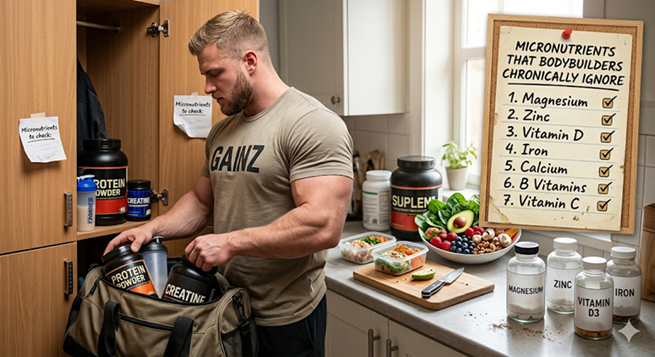
Micronutrients That Bodybuilders Chronically Ignore
Most bodybuilders obsess over protein intake, calorie counts, and supplement stacks daily. However, very few athletes consistently pay serious attention to their micronutrient intake. Furthermore, this chronic neglect silently sabotages performance, recovery, and long-term health simultaneously. Micronutrients include essential vitamins and minerals that your body cannot produce independently. Consequently, you must obtain every single one through your daily diet and supplementation. Moreover, intense training significantly increases your micronutrient requirements beyond the recommendations for the general population. Many bodybuilding communities on Reddit openly admit that micronutrient deficiencies cause unexplained plateaus and fatigue. Additionally, experienced lifters often find that their diets lack several essential vitamins and minerals. Furthermore, even athletes eating high-calorie diets regularly fall short of optimal micronutrient levels. Your muscles, hormones, and nervous system all depend heavily on adequate micronutrient availability. Consequently, ignoring these essential compounds directly limits your muscular development and recovery capacity. Moreover, micronutrient deficiencies also weaken your immune system and significantly increase your susceptibility to injury. Health authorities consistently confirm that active individuals require considerably higher micronutrient intakes than sedentary people. Additionally, restrictive cutting diets make it even more challenging for athletes to achieve adequate micronutrient levels. Therefore, addressing your micronutrient intake becomes just as important as tracking your macros every single day.
Magnesium: The Most Underrated Mineral in Bodybuilding
First, magnesium participates in over 300 enzymatic reactions in your body daily. Furthermore, it directly supports muscle contraction, protein synthesis, and energy production simultaneously. Moreover, intense training results in significant magnesium loss through sweat during each session. Consequently, most hard-training athletes operate with chronically low magnesium levels unknowingly. Additionally, low magnesium levels disrupt sleep quality, further impairing muscle recovery and hormonal balance. Therefore, prioritizing magnesium-rich foods like spinach, pumpkin seeds, and dark chocolate delivers meaningful performance benefits.
Zinc: Essential for Testosterone and Muscle Repair
Furthermore, zinc plays a critical role in natural testosterone production and immune function. Many bodybuilders rapidly deplete zinc through heavy sweating and high-intensity training. Moreover, research consistently links zinc deficiency to reduced anabolic hormone levels in active males. Additionally, zinc actively supports wound healing and tissue repair after demanding training sessions. Therefore, consuming oysters, beef, and legumes regularly effectively helps maintain optimal zinc status. Furthermore, zinc supplementation also supports healthy immune function during periods of intense physical stress.
Vitamin D: The Hormone-Like Nutrient You Probably Lack
Moreover, vitamin D functions more like a hormone than a traditional vitamin in your body. Consequently, it directly influences testosterone synthesis, muscle fiber function, and bone density simultaneously. Additionally, research strongly associates low vitamin D levels with reduced strength and increased injury risk. Furthermore, most people living in northern climates experience significant vitamin D deficiency throughout the winter months. Therefore, supplementing with vitamin D3 daily represents one of the smartest investments serious athletes can make. Moreover, pairing vitamin D with vitamin K2 significantly enhances calcium absorption and cardiovascular protection.
Vitamin C: Recovery and Collagen Support Beyond Immunity
Additionally, vitamin C contributes far more to athletic performance than simply supporting immune defense. Furthermore, it directly stimulates collagen synthesis, strengthening tendons, ligaments, and connective tissues. Moreover, intense training generates significant oxidative stress that vitamin C neutralizes efficiently as a powerful antioxidant. Consequently, adequate vitamin C intake accelerates recovery and reduces post-training muscle soreness noticeably. Therefore, consuming citrus fruits, bell peppers, and berries regularly supports both performance and structural tissue health. Additionally, vitamin C also enhances iron absorption, which directly supports oxygen delivery to working muscles.
B Vitamins: The Energy and Recovery Complex You Need
Furthermore, B vitamins collectively support energy metabolism, red blood cell production, and neurological function. Moreover, vitamin B12 deficiency causes persistent fatigue, weakness, and impaired cognitive function in athletes. Additionally, folate and B6 actively support amino acid metabolism and protein utilization after training. Consequently, athletes following restrictive diets frequently develop multiple B vitamin deficiencies simultaneously without realizing it. Therefore, consuming whole grains, eggs, lean meats, and leafy greens ensures comprehensive daily B vitamin coverage. Furthermore, a quality B-complex supplement provides reliable insurance against deficiency during demanding training phases.
Final Thoughts
Ultimately, micronutrients represent the overlooked foundation of every successful bodybuilding program. However, athletes who address these nutritional gaps consistently experience better energy, recovery, and muscular growth. Moreover, optimizing your micronutrient intake costs far less than most premium supplements currently on the market. Therefore, audit your diet honestly, identify your deficiencies, and take targeted corrective action immediately. Your performance, health, and long-term gains absolutely depend on getting these essential nutrients right.
Posted in:
Default category
Related posts
-
 Bodybuilding Trends in the UK for 2025
In the UK, bodybuilding trends evolve rapidly. Currently, enthusiasts chase lean mass gains. Many seek more...Read more
Bodybuilding Trends in the UK for 2025
In the UK, bodybuilding trends evolve rapidly. Currently, enthusiasts chase lean mass gains. Many seek more...Read more -
 The Difference Between Our Cutting and Bulking Stacks
When it comes to bodybuilding, the right stack can transform your results. Many athletes choose stacks designed for...Read more
The Difference Between Our Cutting and Bulking Stacks
When it comes to bodybuilding, the right stack can transform your results. Many athletes choose stacks designed for...Read more -
 The Perfect Bulking Meal Plan for UK Athletes
Building muscle requires more than lifting heavy weights. A structured meal plan fuels the process. UK athletes often...Read more
The Perfect Bulking Meal Plan for UK Athletes
Building muscle requires more than lifting heavy weights. A structured meal plan fuels the process. UK athletes often...Read more -
 How Muscle Recovery Works: The Role of Supplements
Different supplements serve different purposes. Some users find that creatine helps with muscle recovery. It helps...Read more
How Muscle Recovery Works: The Role of Supplements
Different supplements serve different purposes. Some users find that creatine helps with muscle recovery. It helps...Read more -
 The History of Steroids in Sports and Bodybuilding
The world of athletics and physique development possesses a profound, intricate history. Many competitors have...Read more
The History of Steroids in Sports and Bodybuilding
The world of athletics and physique development possesses a profound, intricate history. Many competitors have...Read more
Leave a comment